
William Lane
“A Bloody Bucket Hero”
Private First Class, 110th Infantry Regiment, 28th Infantry Division
Born August 28, 1924 — Died April 9, 2010
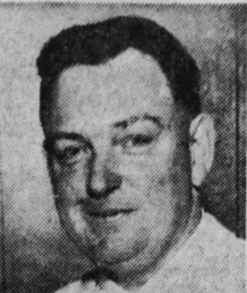
PFC William Henry Lane.
William was born in Spring Brook Twp. on August 28th to parents George and Ruth Lane. George, like many in Spring Brook Twp., was a farmer. Together he and his wife had 5 children, of which William was the oldest of three boys. Neither of William’s younger brothers were old enough to fight in the war.
William was educated in a one-room schoolhouse and never graduated high school. Instead, he went to work with his father on the farm. He enlisted in the service on July 13th, 1944, in Wilkes-Barre, PA. He was just 19 years old.
He trained stateside throughout the remainder of 1944 before shipping off to the ETO the day after Christmas. He was part of the storied 28th Infantry Division, the nation’s oldest national guard. The 28th, given the moniker “blutiger eimer” or bloody bucket by the Germans, was known as a fierce fighting unit.
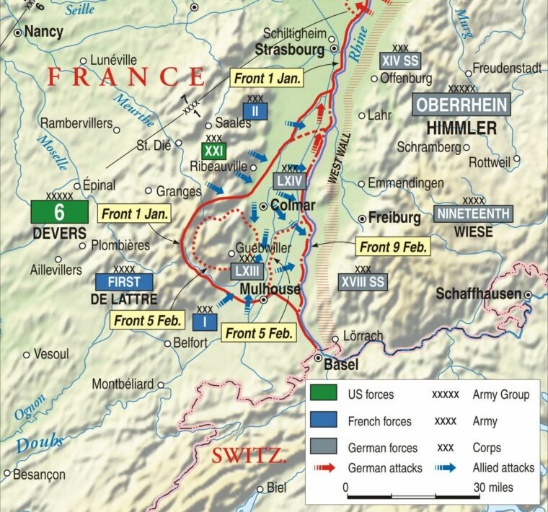
Colmar Pocket battle map.
After landing on Normandy beach D-Day +51, the 28th participated in 5 punishing campaigns in Europe. Notably, it fought in the Hurtgen Forest, the Battle of the Bulge and the Battle of the Colmar Pocket. William fought with the 110th Infantry Regiment, whose role in stopping the Germans during the Bulge is legendary. Deserving a Distinguished Unit Citation, the 110th was outnumbered 10 to 1 but slowed the German advance until units of the 101st Airborne were able to be deployed and establish a perimeter around Bastogne. The 110th is called by some the forgotten heroes of the Battle of the Bulge.
William did not participate in the storied Bulge defense, but rather joined the 110th as a replacement after their withdrawal. It appears as if his first combat was in the Colmar Pocket, or as it was later described, “Hell in the Snow.” The battle was brief, from January 20th to February 9th, but it was savage. The 28th joined the fray on January 29th, and just 2 days later William was wounded as the 110th attempted to liberate the town of Colmar.
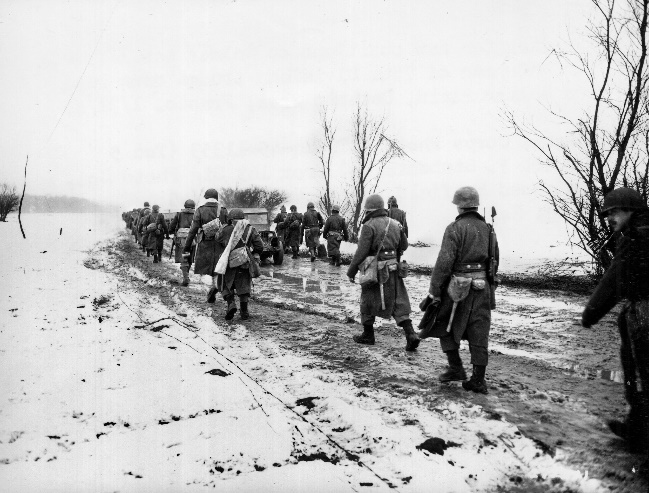
US troops near Colmar.
He suffered wounds to his buttocks and hip as well as his head, supposedly as a result of artillery shell fire. His stay in the hospital was brief and he was back on the front lines later in February. He would remain with the 110th until the war’s end. He was highly decorated, receiving 9 medals and ribbons including the Purple Heart and the Bronze Star.
After the war he returned to Spring Brook where he was an auto mechanic. He married and had 5 children. William and his peers were aptly named ‘The Greatest Generation’ and they lived life to the fullest.